Lessons From Running

running, final for blog, cropped09302014_0001

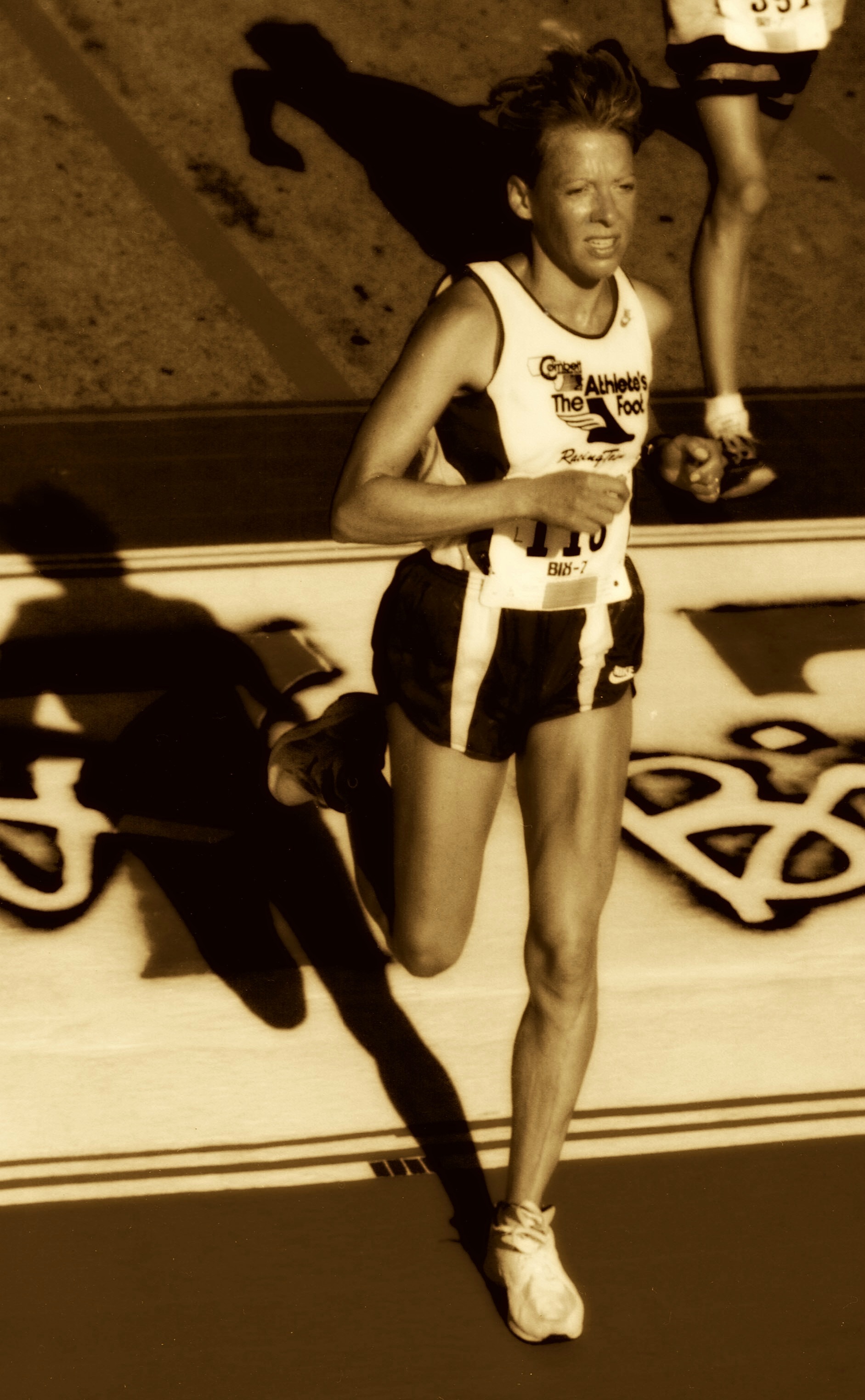
Life can be grueling.

 When you’re depleted, even slight inclines feel steep.

Since people around you aren’t quitting, you don’t either.

Perseverance isn’t supposed to be pretty.

Or easy.

If you dig down deep you discover –

You have more in you than you think.


Hebrews 12: 1 – Therefore, since we are surrounded by such a great cloud of witnesses, let us throw off everything that hinders and the sin that so easily entangles. And let us run with perseverance the race marked out for us, fixing our eyes on Jesus, the pioneer and perfecter of faith.

Whatever Is Pure

Phillipians 4:8 (NIV) –

Finally, brothers and sisters, whatever is true, whatever is noble, whatever is right, whatever is pure, whatever is lovely, whatever is admirable–if anything is excellent or praiseworthy– think about such things.

Consider this video by sisters Lennon and Maisy Stella — whatever is pure, whatever is lovely …

My prayer for you is that the things of this world which are true, noble, right, pure, lovely and admirable always outshine that which is not.


Keep Dreaming

The content of an earlier blog post has been on my mind recently. Perhaps there is somebody who needs to hear it, and will benefit from its message.

cindigale's avatarCindi Gale

When your memories are greater than your dreams, you’ve already begun to die. – Eugene May

A mindset doesn’t happen accidentally. It takes a conscious effort to view today as temporal, and stay hopeful for tomorrow.

The present can be overwhelming, a metaphorical season of drought, harsh winter, or severe flooding. You might find yourself hampered by frustrating or debilitating conditions.

Or, maybe you were overcome by your yesterdays. Cumulative trauma, failures, tragedies, or injustices had an affect on your outlook. Bad events outnumbered the good, enough to induce an expectation of more bad ahead. Sometime during all that hardship, your dreams were buried.

It’s understandable that people surrender dreams and default to memories to fill the void. There are few things more excruciating than rallying to try again, to hope again, to end the vicious cycle, only to be met with more disappointment. When dreams cause pain, memories…

View original post 241 more words

Success

Reflection of the day:

“Success”

He has achieved success who has lived well, laughed often, and loved much;
Who has enjoyed the trust of pure women, the respect of intelligent men and the love of little children;
Who has filled his niche and accomplished his task;
Who has never lacked appreciation of Earth’s beauty or failed to express it;
Who has left the world better than he found it,
Whether an improved poppy, a perfect poem, or a rescued soul;
Who has always looked for the best in others and given them the best he had;
Whose life was an inspiration;
Whose memory a benediction.


“Success” was written in 1904, by Elisabeth-Anne “Bessie” Anderson Stanley (1879-1952) for a contest held in Brown Book Magazine. Stanley won the competition, which was to answer the question “What is success?” in 100 words or less. It is often incorrectly attributed to Ralph Waldo Emerson or Robert Louis Stevenson.

Rehabilitation Basics

When I was a graduate student of physical therapy, we attended lab classes to practice what we learned in lectures. It was during those labs that I realized not one person in our class of forty students personified textbook ideals.

We were all flawed.

When we had a unit on posture, nobody had perfect posture. During exercise physiology class, some had excellent aerobic capacity, some anaerobic; some had great lifting strength; some good endurance—nobody had it all. We each had weaknesses.

Most of us weren’t even aware of our problem areas. Abnormal felt normal.

Our professors taught us that weaknesses often lead to injury or dysfunction; strong muscles tend to get even stronger, weak muscles get even weaker; when tasks are especially demanding those imbalances make us do compensatory movements that put us at greater risk for injury. We learned patient education and exercise techniques to activate and strengthen underused, atrophied muscles, and how to incorporate recovering muscles into whole body movement.

Since balanced strength minimizes injury and maximizes performance, our jobs as physical rehabilitation specialists were to identify patients’ problems and develop treatment plans to solve them.

Physical therapy image for blog

I consider God as a “whole person” rehabilitation specialist. He deals with us in entirety—body, soul, and spirit. He is infinitely more insightful than a human therapist, and knows what within each of us is well developed, partially developed, and what has yet to emerge.

We each have our fortes and flaws. One person has enormous self-discipline but miniscule independent thinking. Another has mastery of a vocation, but poor relational skills. One mind has a surplus of facts, but shortage of wisdom. Another sees the small picture clearly, but lacks global vision, or the even larger view from God’s perspective.

Our God understands our strengths and weaknesses. He knows what skills, behaviors, talents, strategies, and paradigms are over- or under-used, and plans our training programs accordingly.

So how does God, the rehabilitation specialist, develop each of us? Does he target our strengths or our weaknesses?

As much as we humans like to rely on our strengths, it is our weaknesses that God is likely to prioritize. It isn’t to criticize them, but to develop them. His goal is always to heal our injuries and maximize our lives. He orchestrates life circumstances to target liabilities, to develop them to assets.

A man I’ll call Jack, once told me about his “rehab” experience. Jack admitted that with the exception of his work life, he was most comfortable letting others tell him what to think. He didn’t view it as his mind being owned by others, but as it being “the right way”.

quicksand_705_300Though his life and mind were regularly trapped in quicksand, Jack thought outside factors were to blame. He never considered himself as bearing any responsibly for his frequent journeys into muck.

Frustrated, he asked God for help and ended up the recipient of “patient education”:  God had given him the right to think, to make independent decisions, to disagree with and even oppose his maker. Jack had allowed others to violate the free will God honors. He’d let people lead him down paths of sinking sand.

Soon after, came the “strengthening exercises”: Jack found himself in circumstances that called on his weakness. Initially, he felt insecure considering issues and making decisions at odds with majority thinking. Once he used what he’d not used before, Jack never returned to his imbalanced, atrophied ways. The sanity and positive outcomes that accompanied truth and righteousness were his ongoing motivators.

We all have a chance to become strong in every area we possess. It is possible to be well rounded and whole, not just over-strong in some areas and weak in others. There are countless programs and professionals available to help, but to me only one is 100% reliable —

Only God provides all-encompassing rehabilitation that is brilliantly personalized, always in our best interests, certain to avert injuries, and guaranteed to maximize our lives.


1 Peter 5:10 (New Living Translation) –  “In his kindness God called you to share in his eternal glory by means of Christ Jesus. So after you have suffered a little while, he will restore, support, and strengthen you, and he will place you on a firm foundation.”


In His Hands

On a sunny afternoon in August, I watched some talented ceramic artists demonstrate their craft.

One potter told me he often gets requests to make multiple identical items for customers, such as ten bowls or eight plates. Because pottery is his livelihood he happily obliges, but he admittedly finds that kind of work tedious. It’s merely forcing clay into compliance.

His preference is to approach the clay with an entirely different mindset. He described it as “allowing the clay to determine its final shape.” Those hours of work for him are enjoyable and fulfilling, during which a standard ball of clay transforms into a unique work of art.

“Can I not, O house of Israel, deal with you as this potter does?” declares the LORD. “Behold, like the clay in the potter’s hand, so are you in My hand, O house of Israel.” Jeremiah 18:6

Many of us have preconceived ideas about what God will do to us if we offer ourselves as malleable clay in his hands. We’ve observed people who turned “religious” — they morphed into clones, reproductions of a predictable Christian prototype. We recognize that something disconcerting happened to them “at that place”. “With those people.”

And there it is. At that place. With those people.

Outside of religion and inside too, it is so often at the hands of humanity that people are shaped.

It is decidedly different to be clay in the hands of God. He doesn’t have a mold into which he forces us. He does not produce multiple identical bowls or plates.

Lou Lourdeau's pottery pics, spinning clay and hands

The most willingly pliable clay in the potter’s hand is the most passionately protected, respected, loved, and attended. He is devoted to the clay, working with the properties and qualities within it. The shaping is a partnership between the clay and the potter.

God’s hands don’t touch clay to impose a shape, but to FIND its shape.

He patiently removes the effects of an erroneous world to uncover the clay’s uniqueness. He applies careful pressure not for the purpose of conformity, but to correct what was wrongfully misshapen. Through his Holy Spirit, God meticulously works the clay until all the valuable qualities within become a harmonious part of the whole vessel.

For the good of the vessel. For the good of all vessels.

“But now, O LORD, You are our Father, We are the clay, and You our potter; And all of us are the work of Your hand.” – Isaiah 64:8


Photography by Lou Lourdeau. Thank you once again for sharing your talent.

The Art of Learning

I recently spent time with several ceramic artists who generously shared information about their craft. While the terminology and techniques will have to be revisited for me to grasp, other comments were immediately applicable to life beyond pottery.

DSCN1960. spotlight and frame jpgOn Early Learning. 

The affable man on the right was starting a new piece on his wheel when he stated, almost apologetically, “I’m new to this.”

Though I suspect he’s more experienced than he gave himself credit, I can relate to the insecurities that accompany early learning. It’s not easy being the relative rookie when surrounded by veterans. It takes courage to attempt something new when everyone around you is already accomplished. Especially with an audience.

But don’t we all begin with the basics? Isn’t it the nature of learning to start in kindergarten, so to speak, and advance by steps to graduation day and beyond? Advanced skills and creative results happen only with practice over time.

The beginning stage is a precarious one, when mastery seems so far away. It’s tough to hang in there when success is an unknown. Early on, there have yet to be satisfying results to boost self-confidence and fuel motivation. It’s in the kindergarten stage of a new endeavor that many give up.

Those who quit will never know what might have been.

Those who summon whatever confidence they can muster, who keep expectations realistic and don’t quit, keep potential alive.

DSCN1964 cropped for blogIf we quit — possibilities die.

If we stay, learn, and practice — exciting accomplishments are feasible.


On Lifelong Learning.

DSCN1961.cropped and framed for blog jpgThis experienced artist had some encouraging words for the novice potter, “It took me about five years to feel competent.”

“When did you feel like you’d mastered it?” I asked.

“Never. I’ll be learning this my whole life.”

With an attitude like that, I can only imagine what outstanding pieces he will produce over his lifetime. I envision his artwork reflecting his evolving skills and life experiences. Expecting to learn is evidence of a mind open to influence. The sky is the limit for people like him.

If we approach life with similar attitudes, expectant that learning is a process, mastery is sequential, and development is ongoing, we foster our own growth. If we don’t settle for merely adequate, and instead view results as foundations to improve upon, ours will be lifelong journeys of advancement. With a tweak of a mindset, we can change “Eh, good enough” to lifelong quests of ever-improving skills, abilities, talents, relationships, and works of our hands; and of ever-increasing wisdom and knowledge.


The pictured ceramic artists graciously gave permission to include their images on my blog. Many thanks, guys!

Taming God

The topic of church disillusionment and exodus seems to be everywhere this week. I decided to repost an article I wrote on the topic.

cindigale's avatarCindi Gale

Throughout history men and women have tried to tame God. I liken it to damming a river to control the normal flow of the water. What’s possible with rivers is also possible in religion. A group of people can claim that a portion of the river is theirs. They construct dams to control the living water, pave a parking lot, pop up a building, and hoist a sign with a catchy company name. Let’s call ours Choppy River Church. The river is real, but already altered by the dam. Domesticated. Cultivated. Tamed.

ocoee2-4[1]Choppy River Church advertises, “Come whitewater rafting on God’s true river of life!” When you arrive, you’re handed a life jacket with the company logo, then shuffled to the formal boarding area where you step into a raft emblazoned with the brand name. Reps from the company man the rafts and guard the shorelines. If your raft catches…

View original post 367 more words

Supply and Demand

Many thanks to photographer, Lou Lourdeau, for providing the “water jars” photos. I asked and he kindly supplied.


God is a supplier whose provisions are limitless. His divine storehouses overflow infinitely. We open the flow to all that supply by our demand. He wants us to ask of him. He wants us to expect of him. Why? Because he’s unimaginably generous. He wants to give.

In the “water to wine” story*, when the wine was depleted at a wedding, Jesus’s mother asked him for a miracle. She expected one. Then she acknowledged Jesus’s authority. “Do whatever he tells you.”

Initially, Jesus said, “Why come to me?” His public miracles weren’t supposed to happen yet. “My hour has not yet come.”

We see it wasn’t Jesus who initiated the miracle that day, it was Mary. But when asked, he acted.

I’ve noticed in my own life that I’m motivated by the needs of my circumstances. I’ll happily drop everything to drive to one of my sons in need. I often go from zero to sixty, from no writing inspiration to highly motivated, simply because viewers logged on. I even move into action for a lawn in need of mowing.

Need compels provision.

God is like that. He responds to our requests. If we demand nothing from him, expect nothing from him, need nothing from him, ask nothing from him — nothing is exactly what we get.

There are valuable lessons in Mary’s example: Approach God for the solution. Ask of him. Expect him to meet our needs. Accept his will and his timing. And be prepared that he may respond and give beyond what we ask or think.

Ephesians 3:20 (Amplified Bible) 20 Now to Him Who, by (in consequence of) the [action of His] power that is at work within us, is able to [carry out His purpose and] do superabundantly, far over and above all that we [dare] ask or think [infinitely beyond our highest prayers, desires, thoughts, hopes, or dreams]—


Lou Lourdeau's pics, vessel for wine, blog

*John 2: 1 On the third day a wedding took place at Cana in Galilee. Jesus’ mother was there,and Jesus and his disciples had also been invited to the wedding. When the wine was gone, Jesus’ mother said to him, “They have no more wine.”

“Woman, why do you involve me?” Jesus replied. “My hour has not yet come.”

His mother said to the servants, “Do whatever he tells you.”

Nearby stood six stone water jars, the kind used by the Jews for ceremonial washing,each holding from twenty to thirty gallons.

Jesus said to the servants, “Fill the jars with water”; so they filled them to the brim.

Then he told them, “Now draw some out and take it to the master of the banquet.”

They did so, and the master of the banquet tasted the water that had been turned into wine. He did not realize where it had come from, though the servants who had drawn the water knew. Then he called the bridegroom aside 10 and said, “Everyone brings out the choice wine first and then the cheaper wine after the guests have had too much to drink; but you have saved the best till now.”

11 What Jesus did here in Cana of Galilee was the first of the signs through which he revealed his glory; and his disciples believed in him.