Several years ago at a grade school where I worked, there was an infestation of mice. Students were asked to clear their desks and backpacks of snacks, while custodial staff handled the eradication of the rodents. One afternoon after the students had been dismissed, a mouse happened near the path of a teacher. Being a pragmatic guy, a farmer on the side, and conveniently wearing sturdy hiking boots, the teacher promptly stomped on it.
Not wanting to burden the custodians, he took cleanup into his own hands. Just as he returned from disposing of it in an outdoor bin, he heard a frenzied colleague inquire of their peers, “Has anyone seen my hamster?”
I know. It’s horrible and hysterical all at once. To us. But not to either of those teachers. And not to the poor little classroom hamster, may he rest in peace.
I’m not a fan of futility. I’ve noticed it’s about the biggest oppressor of my spirit. I don’t mind hardship so much if it yields something good. But if trouble is all for nothing—if there are no improved conditions, if all is futile—then the flames of my hope, ambition, purpose, and joy are reduced to smoldering embers.
In Romans 8:20, it says: For the creation was subjected to futility, not willingly, but because of him who subjected it, in hope that the creation itself will be set free from its bondage to corruption and obtain the freedom of the glory of the children of God.
The NIV version uses the word “frustration” instead of “futility.” That doesn’t sound any better. And I’m curious about the phrase, “because of him who subjected it.” It implies God may be the one responsible for frustrating us. Why would he do that? And if not him, why would he allow it? Can anything good come out of futility?
I think it can. The snuffing does something unique to the embers of a spirit. When we get a chance to live again, to be a fire again in an open space with pure air, it’s a bigger and better fire than it ever was before.
But we don’t know that when we’re being smothered. When we’re forced to endure prolonged hardships or injustice, our choked spirits fade. If it’s bad enough, for long enough, we get desperate for something to change. Death can even look appealing, comparatively better than unending agony.
“Just douse me with water already, and let it be over with. Kill off this struggling spirit if nothing is ever going to change. Or relieve me of frustration and bring these fading embers to a full flame. Something other than this futility.”
If that’s you, I pray you’re soon relieved of the dampening, snuffing and futility. May the oppressive blanket smothering your fading hope be removed, and fresh air breathed onto the embers of your spirit. May your soul be rekindled and grow at the perfect pace, even hidden when needed to avoid another snuffing. Ultimately, may your fire be ignited to full, bounding flames of purposefulness, ambition, joy, gratitude, righteousness, hope, faith, and love.
If you are fading right now, don’t worry about the “why”, “when”, or “how”. Just get through today. Do that again tomorrow. One day you’ll look back and marvel—somehow the fire that leapt from your futile conditions is grander and more meaningful than if your spirit had never been suppressed and dampened at all.
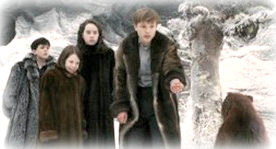
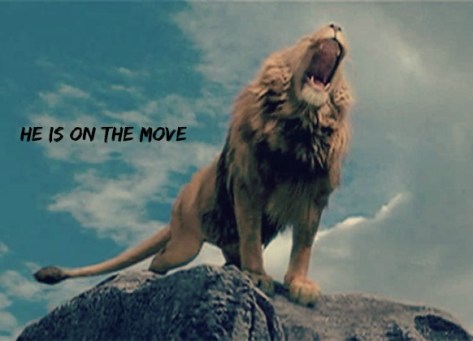
“They say Aslan is on the move—perhaps he has already landed,” [said Beaver].
And now a very curious thing happened. None of the children knew who Aslan was any more than you do; but the moment the Beaver had spoken these words everyone felt quite different … At the name of Aslan each one of the children felt something jump in its inside.
Edmund felt a sensation of mysterious horror.
Peter felt suddenly brave and adventurous.
Susan felt as if some delicious smell or some delightful strain of music had just floated by her.
And Lucy got the feeling you have when you wake up in the morning and realize that it is the beginning of the holidays or the beginning of summer.
Official Live video for “Noel (feat. Lauren Daigle)” by Chris Tomlin
‘ADORE: Christmas Songs of Worship’, the Christmas album from Chris Tomlin, is available at: http://smarturl.it/ChrisTomlinAdore?I…
1. something that is to happen or has happened to a particular person or thing; lot or fortune.
2. the predetermined, usually inevitable or irresistible, course of events.
From experience, I can verify the irresistible aspect of destiny. It beckons. It takes me forward despite all of my human shortcomings and fears. I do not want to resist it. I could, I know, and thereby prevent a whole chain of events from transpiring, but I don’t want to do that.
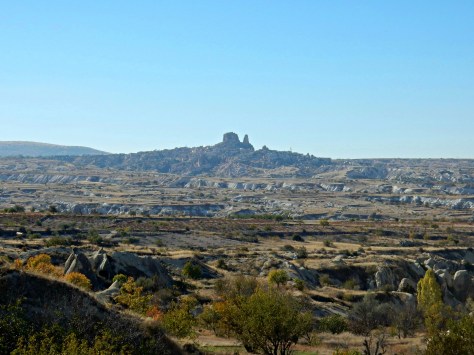
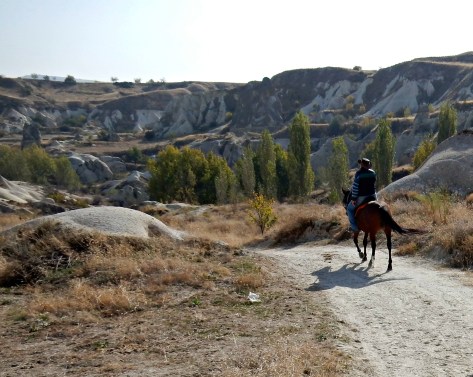
Why allow myself to be taken forward into the unknown, into a wilderness, even into a wasteland?
Because I sense something wonderful ahead. From what I’ve stumbled upon so far in this new, unfamiliar wilderness, it is good. Very, very good.
“Taste and see that the Lord is good; blessed is the one who takes refuge in him.” (Psalm 34:9 NIV)
Despite the challenges and insecurities, I choose to proceed in the unknown. Why?
Because I am absolutely certain that God’s love for me is beyond my comprehension. I am convinced that his vision is infinite, flawless, and inconceivably wise, even while my view is through a tiny, mist-covered porthole. I am sure of God’s protection for me in this unfamiliar terrain — where he beckons he provides an impenetrable fortress, a complete shield and rear guard — I may hear hostile voices beyond his walls, but enemy arrows will not reach me.
I am safe in my destiny. I am secure in my destiny. I will have the constant companionship of the Holy Spirit in my destiny.
What’s true for me, is true for you.
You are safe in your destiny. You are secure in your destiny. You will have the constant companionship of the Holy Spirit in your destiny.
God beckons with a plan for your life. Will you follow?
I determined to follow him over twenty years ago, albeit fearfully, hesitantly, and somewhat erratically. The destination was not made clear — there were no road signs along the way with the exact name of where I was headed, what I would be doing, or who I would be doing it with. I remember well the misgivings and angst that accompanied my decision to follow anyway, without knowing.
I trusted him. On days I couldn’t muster up real trust, I followed because I had committed to.
In the midst of all that uncertainty was a sense of something ahead. It beckoned. It promised. It offered circumstances that would put to rest my unmet needs. It would make sense of chronically undeveloped, frustrated qualities and yearnings within me.
I can describe it only as a sense of purpose, a destiny beyond my understanding, a calling from my familiar life into an unknown one.
For many years after my first steps into it, I had a mysterious expectancy — something better was ahead. Only in the past few years am I aware of being in it. Finally. I can’t say that I can identify what, exactly, I am in, I just know that it has finally arrived.
Or maybe it’s me who finally arrived in it.
Maybe this sense of destiny being fulfilled has to do with the writing that began in earnest five years ago. Maybe it’s the new people that came into my life unexpectedly, or the reappearance of many from my past. Maybe it’s the removal of some people. Perhaps it’s the distance I’ve gained on injustices and realizing that the “bad stuff” is not repeating. Maybe it’s due to further yielding to God’s will, of passing some kind of crucial, incremental notch on my seemingly endless cog of surrender.
Maybe it’s all of that and far more. I may remain forever unenlightened, and my understanding of it might not matter … I just know I’m in something new.
“See, I am doing a new thing! Now it springs up; do you not perceive it? I am making a way in the wilderness and streams in the wasteland.” Isaiah 43:19
You also have a destiny, a purpose, a calling to something new. It is good ahead for you, irresistibly good. Choose it, and be confident that God will make a way for its fulfillment.
He leads. You need only to trust him enough to follow where he leads.
“All the days planned for me were written in your book before I was one day old.” Psalm 139:16
“For we are God’s masterpiece. He has created us anew in Christ Jesus, so we can do the good things he planned for us long ago.” Ephesians 2:10
We’re used to having the logical, evidence-based mindset, “I’ll believe it when I see it”.
But God’s ways are different than ours. Spend enough time with him, and our thinking changes to:
“I’ll see it when I believe it.”
It has to do with being made in the image of God. He is a creator; we’re meant to be, too. He creates with his words.
Isaiah 55:11 – “… so is my word that goes out from my mouth:It will not return to me empty, but will accomplish what I desireand achieve the purpose for which I sent it.”
He wants us to do the same — believe, speak accordingly, and thereby create righteousness in our immediate worlds.
“So I can say anything I want, and it will happen?”
No. Probably not. Not anything you want.
Consider Jesus’s explanation in John 5:19 – “Very truly I tell…
1 There is a time for everything,
and a season for every activity under the heavens:
2 a time to be born and a time to die,
a time to plant and a time to uproot,
3 a time to kill and a time to heal,
a time to tear down and a time to build,
4 a time to weep and a time to laugh,
a time to mourn and a time to dance,
5 a time to scatter stones and a time to gather them,
a time to embrace and a time to refrain from embracing,
6 a time to search and a time to give up,
a time to keep and a time to throw away,
7 a time to tear and a time to mend,
a time to be silent and a time to speak,
Finally, brothers and sisters, whatever is true, whatever is noble, whatever is right, whatever is pure, whatever is lovely, whatever is admirable–if anything is excellent or praiseworthy– think about such things.
Consider this video by sisters Lennon and Maisy Stella — whatever is pure, whatever is lovely …
My prayer for you is that the things of this world which are true, noble, right, pure, lovely and admirable always outshine that which is not.
When I was a graduate student of physical therapy, we attended lab classes to practice what we learned in lectures. It was during those labs that I realized not one person in our class of forty students personified textbook ideals.
We were all flawed.
When we had a unit on posture, nobody had perfect posture. During exercise physiology class, some had excellent aerobic capacity, some anaerobic; some had great lifting strength; some good endurance—nobody had it all. We each had weaknesses.
Most of us weren’t even aware of our problem areas. Abnormal felt normal.
Our professors taught us that weaknesses often lead to injury or dysfunction; strong muscles tend to get even stronger, weak muscles get even weaker; when tasks are especially demanding those imbalances make us do compensatory movements that put us at greater risk for injury. We learned patient education and exercise techniques to activate and strengthen underused, atrophied…







 Cindi Gale