I See Your Courage

cindigale's avatarCindi Gale

“Courage is contagious. When a brave man takes a stand, the spines of others are often stiffened.”

So many of you exhibit courage. It has not gone unnoticed. While the effect on others is invisible to you, you have empowered, emboldened, and strengthened others by your bravery. I am just one person impacted.

I’ve watched you pick yourself up after great tragedies and put one foot in front of the other again, resuming a life forever altered. I’ve observed you endure the small but relentless blows of life, too, determined to not let them beat you, or define you, or deny you.

I’ve marveled at your courage to begin new careers and ventures and fields of study, often not by choice but born of necessity. Some of you did that because your first choice, your preferred life, dissolved before your eyes. Still, you found Plan B, or C, or D…

View original post 131 more words

She Loves Him

My favorite part of “The Chronicles of Narnia” series is the love between Lucy and Aslan.

He is the depiction of Jesus. And of God. He is massive. Powerful. Immutable. His ferocity is frightening to others.

But not to Lucy. She loves him. She buries her face in the beautiful silkiness of his mane, riding high over the mountains of Narnia. Death is certain should she fall, but she is undaunted. Settled on his broad shoulders, her fists clutch that golden mane. Because it is Aslan that carries her, Lucy is carefree.

Aslan, riding Aslan, for blog

His frame is strong. Unwavering. Secure. Unassailable. He never falters. Never misleads. Never abandons her. He never lowers her to earth anywhere short of stable, sheltered ground.
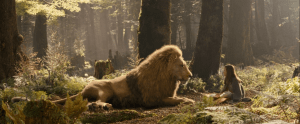
Aslan and Lucy face to face

He is insulating. He speaks to her softly, words rich in wisdom. All at once, his heart a blend of tenderness, intensity, and protectiveness. In there also, his own pain.

And so she loves him.


An excerpt of their reunion, from “Prince Caspian”: The Return to Narnia …

And then—oh joy! For he was there: the huge Lion, shining white in the moonlight, with his huge black shadow underneath him.

But for the movement of his tail he might have been a stone lion, but Lucy never thought of that. She never stopped to think whether he was a friendly lion or not. She rushed to him. She felt her heart would burst if she lost a moment. And the next thing she knew was that she was kissing him and putting her arms as far round his neck as she could and burying her face in the beautiful rich silkiness of his mane.

Aslan and Lucy reunion cropped

“Aslan, Aslan. Dear Aslan,” sobbed Lucy. “At last.”

The great beast rolled over on his side so that Lucy fell, half sitting and half lying between his front paws. He bent forward and just touched her nose with his tongue. His warm breath came all round her. She gazed up into the large wise face.

“Welcome, child,” he said.

“Aslan,” said Lucy, “you’re bigger.”

“That is because you are older, little one,” answered he.

“Not because you are?”

“I am not. But every year you grow, you will find me bigger.”


C.S. Lewis, Prince Caspian: The Return to Narnia The Chronicles of Narnia (1951, this edition Harper Collins, 1994) 141.

Freedom Of Choice

cindigale's avatarCindi Gale

We’re all familiar with disappointment. Some disappointments in life are mild, some are severe. The greater our investments of time, resources, and emotions into specific areas of our lives, the more devastated we are when we find ourselves halted on our roads of choice.

The more we care, the more it hurts.

If we’re making big emotional deposits into a person at the exact time that person decides to withdraw from our shared lives, the abrupt end is shocking. We are devastated. We’re traumatized.

The one left holding an abandoned partnership or thwarted interest wonders, What about what I want? What happened to my freedom of choice? Why am I suddenly powerless? How did I miss the signs of this happening? Is it too late to force us back on track? Are my options exhausted? Should I grovel? Should I relent? Why is it that the time I most need…

View original post 334 more words

Beyond Expectations

cindigale's avatarCindi Gale

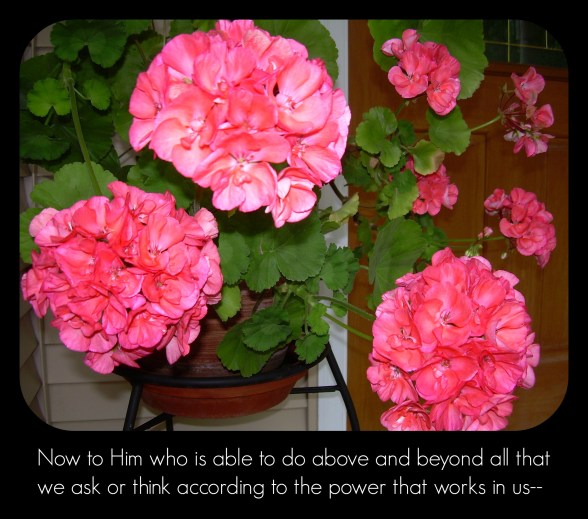
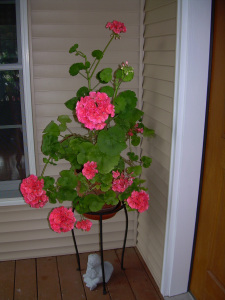
I call it my “geranium on steroids”. It was just a wee little thing when I planted it, and if I’d thought about it at all (which I didn’t), I would have predicted the plant to reach twelve inches or so in height, and produce a few flowers at once. That’s what “normal” geraniums do. I didn’t do anything special to it. I simply watered it a couple times per week, as I do all my outdoor potted plants.

DSCN2232Yet, that wee little geranium quickly grew oversized leaves, shot up to a height of thirty-six inches, burst forth a plethora of extravagant blooms, and is loaded with buds still to flower.

That’s the kind of abundance God wants to provide for us. We hope, we pray, and we envision His response within the confines of “normalcy” … and yet He is infinitely more than we ask or imagine.

We are…

View original post 142 more words

Who You Are

“Glorious”

[Verse:]
There are times when you might feel aimless
You can’t see the places where you belong
But you will find that there is a purpose

It’s been there within you all along and when you’re near it
You can almost hear it

[Chorus:]
It’s like a symphony just keep listenin’
And pretty soon you’ll start to figure out your part
Everyone plays a piece and there are melodies
In each one of us, oh, it’s glorious

[Verse 2:]
You will know how to let it ring out as you discover who you are
Others around you will start to wake up
To the sounds that are in their hearts
It’s so amazin’, what we’re all creatin’

[Chorus:]
It’s like a symphony just keep listenin’
And pretty soon you’ll start to figure out your part
Everyone plays a piece and there are melodies
In each one of us, oh, it’s glorious

[Bridge:]
And as you feel the notes build
You will see


Song credit, “Glorious”, belongs to David Archuleta.

Joy With The Morning

cindigale's avatarCindi Gale

When we find ourselves thrust into difficult, (even devastating) seasons of life, we should fully expect to survive those times of despair. We should know this too: they are but passing storms.

For everything there is a season,
a time for every activity under heaven.
A time to be born and a time to die.
A time to plant and a time to harvest.
A time to kill and a time to heal.
A time to tear down and a time to build up.
A time to cry and a time to laugh.
A time to grieve and a time to dance.
A time to scatter stones and a time to gather stones.
A time to embrace and a time to turn away.
A time to search and a time to quit searching.
A time to keep and a time to throw away.
A time to tear and a time…

View original post 34 more words

Avoiding The Bunkers

cindigale's avatarCindi Gale

Since Zach Johnson of nearby Cedar Rapids, Iowa, just won the British Open, let’s talk golf. Specifically, let’s talk hazards.

By definition, a hazard is an area of a golf course which provides a difficult obstacle, and is usually of two types: water hazards such as lakes and rivers; and man-made hazards such as bunkers. Bunkers are designed to be impediments to golfers’ progress toward the green.

There are man-made hazards in life, too. They are abundant in quantity, seeped in varying degrees of injustice or cruelty, and often come from unexpected sources. Who are these people who choose to be bunkers, who aspire to catch us in their traps?

  • They are the trolls at gatherings or on social media, baiting whoever will bite with untrue or bombastic statements. They like to inflame, to goad us into reacting, to pull us into their broiler. The antitheses of peacekeepers, they are…

View original post 321 more words

Every Little Thing Gonna Be Alright

Matthew 6:25-34

Do Not Worry

25 “Therefore I tell you, do not worry about your life, what you will eat or drink; or about your body, what you will wear. Is not life more than food, and the body more than clothes? 26 Look at the birds of the air; they do not sow or reap or store away in barns, and yet your heavenly Father feeds them. Are you not much more valuable than they? 27 Can any one of you by worrying add a single hour to your life?

28 “And why do you worry about clothes? See how the flowers of the field grow. They do not labor or spin. 29 Yet I tell you that not even Solomon in all his splendor was dressed like one of these. 30 If that is how God clothes the grass of the field, which is here today and tomorrow is thrown into the fire, will he not much more clothe you—you of little faith? 31 So do not worry, saying, ‘What shall we eat?’ or ‘What shall we drink?’ or ‘What shall we wear?’ 32 For the pagans run after all these things, and your heavenly Father knows that you need them. 33 But seek first his kingdom and his righteousness, and all these things will be given to you as well. 34 Therefore do not worry about tomorrow, for tomorrow will worry about itself. Each day has enough trouble of its own.


“Three Little Birds” song credit goes to the great Bob Marley.

Weed Management When “Weeds” Are People

The Bible often references agrarian principles. If we sow good seed, in time we reap good crops. Beyond planting and harvesting, we are responsible for removing weeds. Weeds rob the intended crop of nutrients and moisture that are essential to reach full potential.

For some, those weeds are selfishness, deceitfulness, pride, unfaithfulness, and other personal character deficits. For others, the weeds implanted in their otherwise well-maintained lives and hearts are actually people. Not all people, of course, but those who masquerade as high quality crops or workers when they are not, as caring and selfless friends who are anything but, as ardent supporters who are merely pandering in order to plunder another’s harvest, as hardworking fellow farmers while conceiving shortcuts, as peers of sweat equity when their sweat is contrived.

Determining what to do with those persistent weeds is the most agonizing of all, requiring God’s wisdom, discernment, and strength, and even after the weeds are reconciled, His ongoing comfort and encouragement.

On this topic, the following is a prayerful letter I wrote many years ago to a friend, using metaphors of farming. Perhaps it will be helpful to someone else today who is dealing with “people weeds”.


I hope that your farmstead is vibrant, with your loved ones happily working together to produce an abundant crop. I pray that as the one responsible for your farmstead, you have God’s direction and wisdom to plant, tend and disperse your harvest wisely.

May you farm well, so that God will be able to fill your barns with the golden grains of His harvest. May your crops be abundant and ready for harvest, in fields that are not visible to passing motorists. May they remain hidden, remote from public viewing, until God determines the optimal time for harvest.

May your barns be filled with a bountiful harvest, the grain golden, supreme, and uncommon, unexpected in quality and abundant in quantity.

Of your crop, let locals remark in surprise, “How did this harvest come from this area? How did it come from this farmer? I’ve never seen this before, from that farm. I wasn’t even watching for that farmer’s harvest. I didn’t expect it from him/ her. I was expecting it from the hyped newcomers, the ones talked about, the ones the community gathers around for polished speeches and proud displays of grains.

“But this grain from this unexpected farmer is undeniably of God … superior in quality, true, golden and not hoarded or boasted about. Instead of displaying his grain for all to admire, he quietly goes about sharing his harvest with those in true need. The grain from the unexpected farmstead satisfies hunger and is shared like the sharing of heirloom seeds, for those who receive to plant for ongoing production and multiplication.”

May you sow and tend your crops with an honorable heart and a tender spirit. Though relationships may crumble, if you have been diligent to farm well, you mustn’t determine that you are the cause. You can’t overcome the will of another. Consider patriarchs of the Old Testament. Many men stood alone in righteousness, while surrounded by dishonorable people.

Let people own responsibility for their choices and thinking, and don’t incorrectly determine that their wrong thinking is due to you. Do you have more power than God himself exerts over people? Even God does not force righteousness on people, though He has labored to convince them that righteousness is best. When they choose to disregard goodness in favor of selfishness, He walks away from them, allowing them their choice. He moves on to be in relationship with people who want Him, who love Him, who talk and listen and include Him. Should you do differently than the Lord himself does with people?

Because you farm faithfully, respectfully, and carefully, you will yet see the fruits of your diligence. There is ample time in your life ahead for goodness, maturity, kindness, zeal, love, sharing, abundance, nobility, respect, and the honor you are due.

Would a good farmer be satisfied with a crop of thorns and weeds? Should you be satisfied with a life that includes thorns, when you have in fact sown fine seed and tended your fields by consistently living righteously? Your diligence is not overlooked by God, though your community has failed to commend you, or your crop has yet to flourish.

It is time for you to consider the thorns that you see on your farmstead. Who sowed these weeds? Not you, but another — it was not you who planted them.

What then, should you do about them? Ignore them? Allow them? What would a good farmer do? Wouldn’t he focus on them, rather than ignore them? Won’t they grow and multiply if he ignores them? Don’t excellent farmers eradicate weeds? What if those weeds are people, you say? What then?

Focus on them. Put your ear to God, and ask about those weeds. You want to be responsible and righteous, above all. You don’t first seek happiness. You first seek righteousness, which is commendable. However, you have misguidedly overlooked weeds, believing it was the right thing to do. Is it?

Consider the weeds. What are they rooted in? God soil? — then leave them be, they may yet transform. But you know who is not rooted in “God soil”; who is rooted in what opposes God. Does the plant want to be transplanted into God’s soil? You know it does not. It wants to live and move and have its being in the soil which opposes God. Or competes with God.

A plant bears good fruit or it does not. If the plant does not want to be transplanted into righteous soil and has shown this by its actions (ignore its verbiage) time and time again, it is like the fig tree that failed to bear fruit in a year and so was ordered chopped down. You cannot change the mind of another. Each is free to choose.

A house divided cannot stand. If the house is your farmstead, will ignoring divisiveness and thorns yield improved crops? No, of course not. The crops will worsen, not improve. Your own field will worsen, not improve. It will fail to produce the pure, fine crops that reflect who you are.

It is time for your harvest. You have been a diligent farmer whose crops are of high caliber. Separate your fields of golden grains from others’ fields of thorns. Enjoy the harvest of your fields. Love the harvest of your fields. Share wisely, with those whose hearts are amenable to God’s ways, not with those who steal or trample on God’s harvest.

It is time for you to reap the abundant, golden crop that you planted and tended, and have longed to harvest.


Matthew 7:6  “”Do not give dogs what is sacred; do not throw your pearls to pigs. If you do, they may trample them under their feet, and turn and tear you to pieces.”

Leviticus 26:3-4  “If you walk in My statutes and keep My commandments so as to carry them out, then I shall give you rains in their season, so that the land will yield its produce and the trees of the field will bear their fruit.”

Matthew 13 Then Jesus used stories to teach them many things. He told them this story: “A farmer went out to sow seed. While he was scattering the seed, some of it fell by the road. The birds came and ate all that seed. Other seed fell on rocky ground, where there was not enough dirt. It grew very fast there, because the soil was not deep. But when the sun rose, it burned the plants. The plants died because they did not have deep roots. Some other seed fell among thorny weeds. The weeds grew and stopped the good plants from growing.But some of the seed fell on good ground. There it grew and made grain. Some plants made 100 times more grain, some 60 times more, and some 30 times more.

Psalms 65:9-10  You visit the earth and cause it to overflow; You greatly enrich it; The stream of God is full of water; You prepare their grain, for thus You prepare the earth. You water its furrows abundantly, You settle its ridges, You soften it with showers, You bless its growth.

Unwavering

Every good gift and every perfect gift is from above, coming down from the Father of lights with whom there is no variation or shadow due to change. – James 1:17 (English Standard Version)

God is constant and unwavering. If we don’t understand that, we often bring our experiences from human relationships to our relationship with him. We try to change him. We make inaccurate assumptions about him. We accuse him. We blame him.

And then we expect intimacy with him. We want him to comfort and coddle us; bless and favor us; counsel and confide in us. When he does, we exploit what he gives, or twist the words and meaning of what he confided. No wonder, when we mishandle the priceless things he entrusts us with, he stops sharing them. He still is nearby, but the intimacy of the relationship is compromised.

What happens over time, for those who mistreat him this way, but still want to be close to him? We have no choice but to be the ones who must change. Thankfully, with God, change is possible. Where we were captive, we become free. Where we used to be weak, we become strong. Where we were confused, we become certain. Where we were manipulatable and timid, we become secure and confident.

Those are but a few of the inevitable outcomes of a right relationship with God. We don’t change him — he is constant and unwavering — it’s we who must change. As he makes us more like him over time, we become constant and unwavering too. That constancy impacts our values, interests, purposes on earth, and relationships with people.

As we gain secureness and strength, the dynamics of any unhealthy relationships are disrupted. Some people don’t like how we’ve changed. They had come to expect our weaknesses, and habitually capitalized on them. Relationships might dissolve as a result. If it were up to God, we wouldn’t have been in relationship with some people in the first place.

What can people in our lives do if they simply don’t want to lose us? As long as constancy prevails in us, over time the only option to resolve the friction is for them to change, too. Their adaptations toward God-likeness can salvage the relationship. Thankfully, what happened in us can happen to them as well. Some will initiate change solely to retain the relationship, even if they wouldn’t have otherwise. All of that change was compelled not by confrontation or demands, but by the constancy of God.

While he remains constant, we are compelled to clean up our hearts and alter our thinking to conform to his heart and mind. If we will do that, intimacy with God grows. He lets us near his heart. He shares what’s on his mind. Beyond that, he is intimately involved in listening to our hurts, interests, and thoughts. That intimate, healthy relationship is the foundation upon which the remainder of our lives are built.

stone foundation