For two days a phrase has been on repeat in my mind:
“It’s hard for you to kick against the pricks.”
Finally, I remembered it in song form, leading me to listen to Johnny Cash’s familiar “When the Man Comes Around” with fresh awareness.
So, what does it mean, this phrase, “kick against the pricks”? An investigation yielded this explanation from “Got Questions Ministry”:
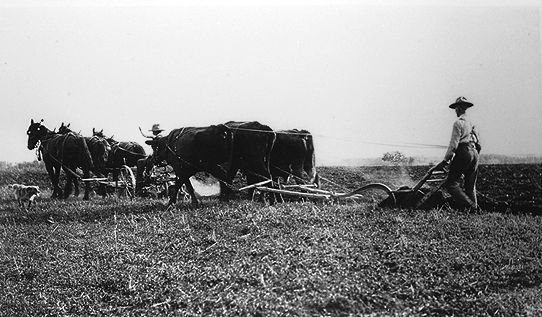
“It is hard for you to kick against the pricks” was a Greek proverb, but it was also familiar to the Jews and anyone who made a living in agriculture. An ox goad was a stick with a pointed piece of iron on its tip used to prod the oxen when plowing. The farmer would prick the animal to steer it in the right direction. Sometimes the animal would rebel by kicking out at the prick, and this would result in the prick being driven even…
What determines a person’s unique identity? What is constant about him? What changes about him? Has he morphed to the climate, attitudes, perceptions and expectations of certain groups of people?
Most of us have experienced this morphing sometime in our life. We kick ourselves after taking on the group attitude when a discussion erupted. We voice or nod agreement, when it’s not what we agree with at all. We vow to not let ourselves become what others have pegged us, then go to a gathering and act exactly as they expected. It’s a strange power.
Is it possible to be consistent in our identity? Is this what integrity is? Who can hold their own amid the pressures of society, influential people, loved ones, or even the corrupted theologies of some churches, and not flex so much that we sell our souls?
When we compromise our integrity, is it worth it?…
5 Trust in the Lord with all your heart and lean not on your own understanding; 6 in all your ways submit to him, and he will make your paths straight.
Trust in him. Submit to him. Does God ask for our submission to put us in our place? To remind us that he is boss and we are beneath him? He could, because certainly he is above us in every way …
But no. He implores us to submit, acknowledge, or turn to him because he can optimally help us if we do. It’s about the free will that he gave us … We can go our own way if we choose, but if we willingly take every circumstance, every decision, every aspect of our daily lives to him, he will guide us on the path that is straight. The path that is righteous. The path that is good for us and good for others.
We can start by saying and meaning: Not my understanding, but yours. Not my will, but yours. Not my thoughts, but yours. Not my way, but yours. Not my words, but yours.
It’s a process, that transfer of allegiance from self, people, or things to God. There will be errors — it is a discovery process, a learning experience — but if we truly want to surrender our lives to his leadership, he will help us discern which are our thoughts and which are his; what is our will and what is his.
He may lead us along treacherous paths, close to the edge …
… but he won’t lead us off the path or over the edge. His are paths of companionship, direction, love, protection, encouragement, and assurance. Where he leads, we can be sure he is concerned for our welfare, entailing his purposes and our personal gain.
The paths on which he goes before us are not always easy. Some seasons of our lives are extremely challenging. It is on difficult paths that we gain experience, wisdom, discernment, and skills to overcome evil with good. It is there that we discover more and more who he is … Father, friend, and trustworthy guide. It is during difficult times that we prove our faithfulness, our resolve. It is in the trials that we learn that blessings are ahead … There is hope and a future.
Just as spring and summer follow winter, growth in character and wisdom follow hardship. It is during prolonged journeys over difficult paths that we also learn to be good managers of what he gives us. He sets us up for success by giving us a chance to be faithful with very little. When the harvest overflows, we are capable of being trustworthy managers of much. (Luke 16:10)
It is in our best interests to fully trust in God. Follow him, and he will help us negotiate the unruly, pointless, or tumultuous obstacles along the way. Let him, and he will make our paths straight.
God is a supplier whose provisions are limitless. His divine storehouses overflow infinitely. We open the flow to all that supply by our demand. He wants us to ask of him. He wants us to expect of him. Why? Because he’s unimaginably generous. He wants to give.
In the “water to wine” story*, when the wine was depleted at a wedding, Jesus’s mother asked him for a miracle. She expected one. Then she acknowledged Jesus’s authority. “Do whatever he tells you.”
Initially, Jesus said, “Why come to me?” His public miracles weren’t supposed to happen yet. “My hour has not yet come.”
We see it wasn’t Jesus who initiated the miracle that day, it was Mary. But when asked, he acted.
I’ve noticed in my own life that I’m motivated by the needs of my circumstances. I’ll happily drop everything to drive to one of my sons in need. I often go from zero to sixty, from no writing inspiration to highly motivated, simply because viewers logged on. I even move into action for a lawn in need of mowing.
Need compels provision.
God is like that. He responds to our requests. If we demand nothing from him, expect nothing from him, need nothing from him, ask nothing from him — nothing is exactly what we get.
There are valuable lessons in Mary’s example: Approach God for the solution. Ask of him. Expect him to meet our needs. Accept his will and his timing. And be prepared that he may respond and give beyond what we ask or think.
Ephesians 3:20 (Amplified Bible) 20 Now to Him Who, by (in consequence of) the [action of His] power that is at work within us, is able to [carry out His purpose and] do superabundantly, far over and above all that we [dare] ask or think [infinitely beyond our highest prayers, desires, thoughts, hopes, or dreams]—
*John 2: 1 On the third day a wedding took place at Cana in Galilee. Jesus’ mother was there,2 and Jesus and his disciples had also been invited to the wedding. 3 When the wine was gone, Jesus’ mother said to him, “They have no more wine.”
4 “Woman, why do you involve me?” Jesus replied. “My hour has not yet come.”
5 His mother said to the servants, “Do whatever he tells you.”
6 Nearby stood six stone water jars, the kind used by the Jews for ceremonial washing,each holding from twenty to thirty gallons.
7 Jesus said to the servants, “Fill the jars with water”; so they filled them to the brim.
8 Then he told them, “Now draw some out and take it to the master of the banquet.”
They did so, 9 and the master of the banquet tasted the water that had been turned into wine. He did not realize where it had come from, though the servants who had drawn the water knew. Then he called the bridegroom aside 10 and said, “Everyone brings out the choice wine first and then the cheaper wine after the guests have had too much to drink; but you have saved the best till now.”
11 What Jesus did here in Cana of Galilee was the first of the signs through which he revealed his glory; and his disciples believed in him.
Originally posted on Cindi Gale: Then the angel showed me the river of the water of life, as clear as crystal, flowing from the throne of God and of the Lamb.” Revelation 22:1 Imagine a dry riverbed. People stand in and near it, waiting. Hoping. Needing. Pleading. Finally, one day the river fills with pure,…
Humans are a needy lot. Beyond imperatives like food, shelter, and sleep, we need affirmation, hope, motivation, truth, non-fragmented thoughts, noble attitudes, competence, friendships, acceptance, wisdom, and on and on and on.
Do we rely on God to meet our needs? Our areas of lack dovetail with God’s provision. Our needs are a mortise filled with God’s perfectly-fitted tenon. It is a partnership, a melding of a finite human and the infinite God.
John 15:4- “Remain in me, and I will remain in you. No branch can bear fruit by itself; it must remain in the vine. Neither can you bear fruit unless you remain in me. I am the vine; you are the branches. If a man remains in me and I in him, he will bear much fruit; apart from me you can do nothing.
Often our needy lives merit considerable restoration. If a piece of furniture could…
This morning, I happened on some thoughts I jotted down several years ago. I am sharing them in case they might be relevant and helpful to others.
This concept has to do with opposites. A couple Biblical examples are brought to mind:
Matthew 6:24 – No one can serve two masters. Either you will hate the one and love the other, or you will be devoted to the one and despise the other.
Matthew 25:32 – All the nations will be gathered before him, and he will separate the people one from another as a shepherd separates the sheep from the goats.
Also, God sometimes escalates the conditions of what is good to become better. The word I “heard” from Him is ameliorate. He is also escalating the conditions of what is bad to become worse. He gave the word exacerbate.
Ameliorate: to make or become better, more bearable…
2 Chronicles 7:14 “If My people who are called by My name will humble themselves, and pray and seek My face, and turn from their wicked ways, then I will hear from heaven, and will forgive their sin and heal their land.”
What is it to pray and seek God’s face? Listening for God’s direction first requires self-assessment and intentionally becoming a blank slate. It requires great care to not mistake our own pre-existing opinions, views, and desires with His voice. Let me suggest we go “all in” and forego our opinions and loyalties to people, parties, value systems, and even theologies before we seek Him.
We can ready our minds to hear Him by saying and meaning:
Not my thoughts but Yours.
Not my words but Yours.
Not my emotions but Yours.
Not my actions but Yours.
Not my plan but Yours.
Not my will but Yours.
Then we are to listen. Truly listen.
If we hear nothing, then it’s our responsibility to not substitute that silence with our own or someone else’s thoughts. Until we hear, we need to remain neutral. If we move on before hearing directly from His Holy Spirit to ours, then that impetulance is ours to own.
Early on, when we don’t know Him yet, or have just begun to know Him, it’s tricky. There are other voices that sometimes impose themselves, posing as the Holy Spirit. Sometimes they aggress as far as overwhelming us with anxiety, fear, or guilt. It’s part of the learning curve — stay determined: The more you know God, the more obvious it is that those cunning “voices” are not of our Father, but from the father of lies.
It doesn’t end at “hearing from God”. What do we do with information once it has arrived? We have free wills. Do we reject his direction, argue with his knowledge or wisdom, or refuse to believe the gift of discernment He provided? It is always up to us to reject or choose his direction. It is always our choice to disagree or agree with His revelation, but if we continue to be “all in” with his “answers” to our praying and seeking, we can be secure in His truths.
The same is true of personal growth and change: You are free to do so or not. You can choose to conform to people or to conform to God. Slowly but surely it is to our advantage to be transformed by Him, to be more like Him. Let that be our goal.
Whether we hear from Him or not, we do ourselves and others a grave disservice by claiming God agrees with our unchanged selves. We undermine and wrong Him by claiming He endorses us as is. When people have safety in numbers, we are prone to forge ahead with our bold ambitions, but He does not endorse us unless we are following Him, not leading Him.
People are free to proceed without God at any point, while claiming God’s approval. Check out what is happening in the religious world we live in, and see if you can spot them. If you don’t know God, but know only religious law, theology, or cultural values, you are unlikely to discern that God is not there with them as they believe. But if you have invested the hours, days, weeks, months, years, and decades to know Him, you will discern it. You can discern such a mysterious thing as what is true and what is false in the society we live in, because you have done your due diligence; you wanted to know God’s thoughts, not your own; you wanted God’s will only.
When you’ve lived that life, and have been consistently willing to hear from Him and Him alone, it’s not your first rodeo to find yourself alone against the majority of even Christians — you’ve been there and done that a thousand times; He’s proved his words and revelations to you a thousand times as well. You’re a veteran. You spent the time with Him one-on-one to know Him more and more, so you recognize when groups of people are groundlessly claiming God’s endorsement. Though they disagree with you, a crowd against one, you know theirs is not the God you know. You trust your longtime relationship so much that you let Him alone be God.
If enough people do that — truly seek God and God alone — only then, does He promise to hear from heaven and heal our land.
In support of excellence, strength, abounding good works, fullness of life, and actually becoming all that God has had in mind for us to be:
Romans 5:1-2 (TLB) – So now, since we have been made right in God’s sight by faith in his promises, we can have real peace with him because of what Jesus Christ our Lord has done for us. For because of our faith, he has brought us into this place of highest privilege where we now stand, and we confidently and joyfully look forward to actually becoming all that God has had in mind for us to be.
2 Corinthians 9:8 (NIV) – God is able to bless you abundantly, so that in all things at all times, having all that you need, you will abound in every good work.
Philippians 4:13 (NIV) – I can do all this through him who gives me strength.
Some days I can’t digest the day’s news; I know I’m at risk of giving up hope for something specific, or my belief in general that humanity is good. On those days I don’t partake in what damages my faith, and feed instead on words and stories of inspiration, beautiful music or art, nature, or memories of previous victories over fear.
As for my confidence in a God of compassionate intervention, a God who can and will bring miracles to fruition in our lives, I oftentimes must “go it alone” to sustain my faith. When people (including some preachers and many, many Christians) approach with metaphorical axes to hack at my belief in the mighty salvation of our God, I do whatever I must to protect what took so long to grow within.
Courage, faith, hope, love, and peace are precious. They are fine jewels. They are valuable gems. I can’t let them be stolen, mocked, quenched, smothered, damaged or destroyed. They weren’t acquired in a day. They didn’t happen overnight. They cost me greatly. They were forged in the fires of affliction and injustice.
They are gold.
I must do whatever is needed to sustain these gems. It’s up to me to protect them. It’s up to me to keep them alive.
Hebrews 10: 35 So do not throw away your confidence; it will be richly rewarded.
36 You need to persevere so that when you have done the will of God, you will receive what he has promised. 37 For,
“In just a little while, he who is coming will come and will not delay.”
38 And,
“But my righteous one will live by faith. And I take no pleasure in the one who shrinks back.”
39 But we do not belong to those who shrink back and are destroyed, but to those who have faith and are saved.