Kick Against the Pricks

For two days a phrase has been on repeat in my mind:

“It’s hard for you to kick against the pricks.”

Finally, I remembered it in song form, leading me to listen to Johnny Cash’s familiar “When the Man Comes Around” with fresh awareness.


So, what does it mean, this phrase, “kick against the pricks”? An investigation yielded this explanation from “Got Questions Ministry”:

“It is hard for you to kick against the pricks” was a Greek proverb, but it was also familiar to the Jews and anyone who made a living in agriculture. An ox goad was a stick with a pointed piece of iron on its tip used to prod the oxen when plowing. The farmer would prick the animal to steer it in the right direction. Sometimes the animal would rebel by kicking out at the prick, and this would result in the prick being driven even further into its flesh. In essence, the more an ox rebelled, the more it suffered. Thus, Jesus’ words to Saul on the road to Damascus: “It is hard for you to kick against the pricks.”

Of the better-known Bible translations, the actual phrase “kick against the pricks” is found only in the King James Version. It is mentioned only twice, in Acts 9:5 and Acts 26:14. The apostle Paul (then known as Saul) was on his way to Damascus to persecute the Christians when he had a blinding encounter with Jesus. Luke records the event: “And when we were all fallen to the earth, I heard a voice speaking unto me, and saying in the Hebrew tongue, Saul, Saul, why persecutest thou me? It is hard for thee to kick against the pricks” (Acts 26:14 KJV). Modern translations have changed the word pricks to goads. All translations except the KJV and NKJV, omit the phrase altogether from Acts 9:5.

The conversion of Saul is quite significant as it was the turning point in his life. Paul later wrote nearly half of the books of the New Testament.

Jesus took control of Paul and let him know his rebellion against God was a losing battle. Paul’s actions were as senseless as an ox kicking “against the goads.” Paul had passion and sincerity in his fight against Christianity, but he was not heading in the direction God wanted him to go. Jesus was going to goad (“direct” or “steer”) Paul in the right direction.

There is a powerful lesson in the ancient Greek proverb. We, too, find it hard to kick against the goads. Solomon wrote, “Stern discipline awaits him who leaves the path” (Proverbs 15:10). When we choose to disobey God, we become like the rebellious ox—driving the goad deeper and deeper. “The way of the unfaithful is hard” (Proverbs 13:15). How much better to heed God’s voice, to listen to the pangs of conscience! By resisting God’s authority we are only punishing ourselves.


Text credit belongs to “Got Questions Ministry”

“When the Man Comes Around” song credit belongs to Johnny Cash


You Belong

cindigale's avatarCindi Gale

Lou Lourdeau's pottery pics, potter spinning clay

***
“Behold, I belong to God like you; 
 I too have been formed out of the clay.” 
Job 33:6
***
DSCN1961.cropped and framed for blog jpg

 ***

“But now, O LORD, You are our Father,
We are the clay, and You our potter;
And all of us are the work of Your hand.”
Isaiah 64:8
 
***

Lou Lourdeau's pics, shelves of pottery


Photography by Lou Lourdeau, August 2014. Images of ceramic artists shown with their permission. Many thanks to each of you.

View original post

Enlightenment

It’s been less than three days since the most deadly shooting in modern U.S. history. Immediately, the Internet, television news, and social spheres were abuzz with opinions. We’ve heard it all before:  “Gun control is the answer”; “No, gun control won’t stop mass murder”; “Trump did this”; “Trump didn’t do that”; “A white male murderer gets labeled a lone wolf, but after a Muslim or black murder, a whole religion or race is vilified”; “The guy’s a sociopath, don’t lump me in with him just because I own assault weapons”. And on and on it goes.

It’s not who’s right and who’s wrong that caught my attention today. It’s something else that hummed behind the usual roar of discordant voices …

The ink dried on a host of opinions before the victim count in Las Vegas was even finalized. We have become people of instant opinions

There’s something wrong with that.

The same people were saying the same ‘ol, same ‘ol. They’ve held those exact opinions for years. Nothing had changed in the slightest.

There’s something wrong with that, too.

It seems others’ worst tragedy is another person’s opportunity, their opening to set up soapboxes uninvited, from which to bellow personal, staunch beliefs.

There’s something very, very, very wrong with that.

Do people not need time to take in transpiring events and to wait for information before broadcasting their views on this, an unprecedented, bizarre, horrible, numbing, inexplicable event?

Obviously they don’t think so. Or maybe they just don’t think to think.

Watching all this, wide-eyed, baffled at all that is happening, this occurred to me today:

Instant opinions are a sign of closed minds. 

A closed mind can’t do new things, it can’t think outside of the box, it can’t realize it may not know everything, or consider it needs to stay open so it can correct itself when needed. A closed mind can’t listen to others or absorb novel information. A closed mind can’t invent, discover, or pioneer.

So, I wondered, what are the qualities of inventors, discoverers, leading-edge thinkers, or pioneers?

This word came to mind:

Enlightenment.

Enlightenment, by definition, is:

1. having or showing a rational, modern, and well-informed outlook.
the more enlightened employers offer better terms”
2. spiritually aware.
.
It’s synonyms are:  informed, well informed, aware, sophisticated, advanced, developed, open-minded, broad-minded, educated, knowledgeable, wise; civilized, refined, cultured, cultivated “enlightened people don’t punch out people who think differently”
.
Pioneers, inventors, avant-garde thinkers, discoverers and others who have something helpful to offer in changing times, are enlightened.
*
I suspect enlightened people are unlikely to form instant opinions.
.
There’s something right about that.
*
They are the people we need to hear from. They are the people who have earned a voice by virtue of their long-standing habits:  They are consistently slow to opine and quick to listen and learn. They are committed to credibility. They dig for answers, and don’t stop until an acceptable one is found. And then they make it prove itself over time — if it doesn’t hold up they go back to digging.
.
Hopefully, if we will give these people an opportunity, and as listeners adopt a semblance of their patience, they will willingly share some of that wisdom they’ve labored to acquire. Because …
.
We need them. 
*
In this climate of abrasive noise, the same ‘ol, same ‘ol unyielding and unhelpful opinions, and shouting, back-and-forth, closed-minded voices …
*
It is the enlightened voices we need to come from the background to be heard.  
.
When they do, there will be something very, very, very right about it.

In Times Of Trouble

cindigale's avatarCindi Gale

Isaiah 40:29-31
He gives power to the weak
and strength to the powerless.
Even youths will become weak and tired,
and young men will fall in exhaustion.
But those who trust in the Lord will find new strength.
They will soar high on wings like eagles.
They will run and not grow weary.
They will walk and not faint.

Don’t be alarmed when God leads through horrendous conditions instead of routing away from trouble. Keep the faith. It may not look like a good thing while we’re in it, but the training ground will result in good things in time. He has a gain in store — those are the conditions in which we develop command over trouble.

After the “gain from the pain”, we find ourselves elevated a bit more from the earthly plane of living. We are able to more quickly understand God and His ways. We can look back and see how He…

View original post 45 more words

Truth Is Our Friend

cindigale's avatarCindi Gale

Nobody likes unwanted news. We don’t want to believe that a diagnosis is dire, or our behaviors are destructive. We don’t like to hear that someone important to us is not who we thought they were — we won’t accept that a person we’re invested in is a thief, a traitor, an adulterer, or an abuser. Some of us will do anything to avoid unwanted truths like these.

To cope personally, or to save face publicly, we spin or outright deny the facts — it’s remarkable how spectacularly we pull off mental contortionism in our quest to disguise them.

Which is silly if you stop and think about it. No amount of distortion, denial, fabrication, justification, deflection, or delusionment will ever change truth. Like it or not, truth is what it is.

Isn’t it a marvel that people who initially choose deceit out of shame or inability to cope, quickly progress to actually believing…

View original post 392 more words

My Bobsled Prayer

cindigale's avatarCindi Gale

I found the following prayer today. I wrote it several years ago, when I was in a time of inaction and need, and apparently in a rather silly mood. Welcome to …

My Bobsled Prayer

I don’t know what to think, or what to do. I don’t want to move unless it’s Your will, but there is no recent sign of that will. Because of it, I am immobilized. Stagnancy has slowly killed my hope for change and willingness to risk. I am in a vicious cycle. 

Psalm 139:5 “You hem me in behind and before, and you lay your hand upon me.”

Go ahead and push me, God. Move me in Your will. Create walls like the bobsled track, so that my thoughts, sense of purpose, and actions are contained tightly within the boundaries of Your will. Hem in my flaws and weaknesses, my insecurities and fears, my wanderlust…

View original post 138 more words

Ordinary Or Extraordinary, You Decide

“On the one hand, God’s demand for perfection need not discourage you in the least in your present attempts to be good, or even in your present failures. Each time you fall He will pick you up again. And He knows perfectly well that your own efforts are never going to bring you anywhere near perfection. On the other hand, you must realize from the outset that the goal towards which He is beginning to guide you is absolute perfection, and no power in the whole universe, except you yourself, can prevent Him from taking you to that goal. That is what you are in for. And it is very important to realize that. If we do not, then we are very likely to start pulling back and resisting Him after a certain point. I think that many of us, when Christ has enabled us to overcome one or two sins that were an obvious nuisance, are inclined to feel (though we do not put it into words) that we are now good enough. He has done all we wanted Him to do, and we should be obliged if He would now leave us alone. As we say ‘I never expected to be a saint, I only wanted to be a decent ordinary chap.’ And we imagine when we say this that we are being humble.

But that is the fatal mistake. Of course we never wanted, and never asked, to be made into the sort of creatures He is going to make us into. But the question is not what we intended ourselves to be, but what he intended us to be when He made us. He is the inventor, we are only the machine. He is the painter, we are only the picture. How should we know what He means us to be like? …We may be content to remain what we call ‘ordinary people’, but He is determined to carry out a quite different plan. To shrink back from that plan is not humility, it is laziness and cowardice. To submit to it is not conceit or megalomania, it is obedience.”

Quote from “Mere Christianity” by C.S. Lewis,  (page 203).

He Is Who He Is

We’re each the owners of our own soul and will. It is alone that we reach out to God from the depths of our soul, and alone that we experience his response to us. If our personal experiences with God don’t fit into somebody else’s theology or belief system, firsthand experience wins the debate. He is who he is, regardless of what anyone argues to the contrary. Maybe if life were easy, one might trade what God has been to you for the approval of people, but when you’ve suffered for him, you become unwilling to do so.


This slideshow requires JavaScript.

You Have My Respect

People are complex beings. Yet we catch mere glimpses of another’s life and draw conclusions about him.

Only by knowing the mind of God about a person, can we be accurate in understanding him. Or let a person who knows himself inform us, as long as he is self-aware and willing to confide.

We have another option to gain insight: observing behavior. Religious people call it “judging others by their fruit”. But be careful — if we’re not mindful of the environment a person is in, their “fruit” can mislead. What if he is in a God-appointed time of winter, wartime, or injustice?

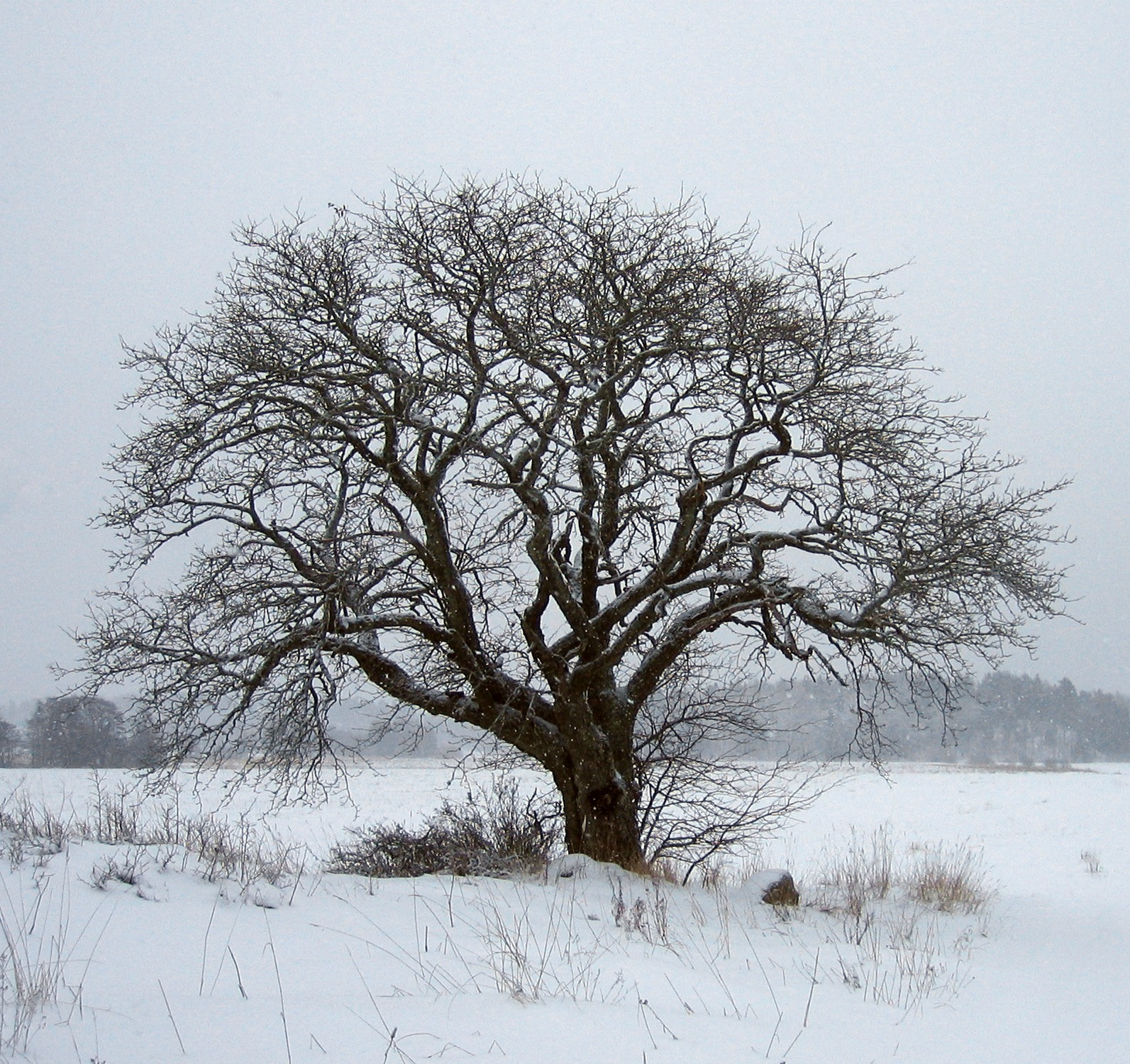
tree in winter for blog pgIs it possible for him to satisfy our need or desire to judge? A person in winter is struggling to survive, not bearing tasty fruit. He is wrapped up and withdrawn to survive the frigid, dangerous climate. He will only open up and bloom when the climate is warm, welcoming and safe.

If a person must judge blindly, why not assume the best-case scenario instead of the worst? When somebody is in winter, war, or mistreatment, why assume that if he isn’t “bearing fruit” he must have lost contact with God? We could assume instead, that he is so dependent on the vine of God that he is digging deeply to stay connected. Deep calls to deep. He is relying less and less and less on things of this earth, (easy to do if nothing on earth is satisfying) and more and more on God alone.

As a person emerges from winter, war, or a season of injustice, do we presume his wants and needs? He doesn’t want pity. He certainly doesn’t want judgment, suspicion, or diminished status in society. He won’t re-enter relationships with people who make him feel “dirty” or unsavory because of the unsavory climate he was in. It’s no reflection on HIM that life was very tough. He may have been a victim of unrighteous peoples’ rights to exercise free will. Yet many people judge a victim as if he is tainted. He’s not “clean” enough. He’s inferior to their “morally superior” position. Religious people can be the harshest of critics.

Survivors of injustice want and need one thing: respect. Respect for not giving up, for having stayed with God when the temptation to bail was a daily threat. Respect for having assumed the ways of God throughout his troubles. Respect for not selling his soul during his agony. Respect for being faithful to God no matter the severity of his conditions. Respect for facing truth, including truths of evil he never wanted to see. Respect for choosing courage and trust instead of escape and denial. Respect for accepting the long season of winter that God controlled.

People who have not been there do not understand. They cannot. They are in no position to believe they do. If they take action without understanding, they are likely to further wrong the sufferer. If curious onlookers would just withhold judgment, they may be fortunate to in time hear about what happened in the suffering.

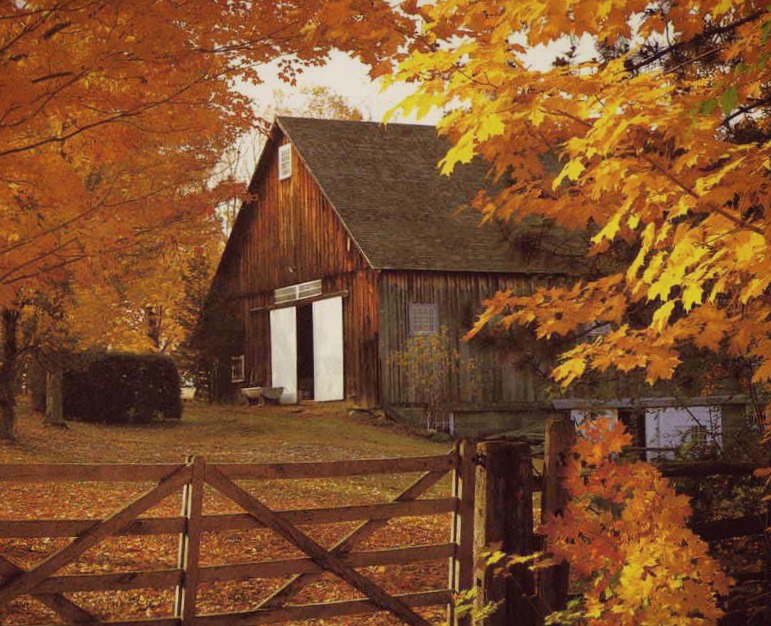
barn in autumn for blog jpgA person who endured years of injustice while dependent on God, no doubt has accumulated overflowing barns of God-given understanding, knowledge, and wisdom. What he gained can’t be summed up in an hour, a day, a week, a month, or even a year. When he shares his experiences, it will be when he is willing and inspired to. If outsiders are patient and nurturing, they may be allowed inside the sufferer’s overflowing barns of treasures from God. But it is never to be taken. It is for the one who suffered and endured to share as he wants.

His bountiful harvest is from God as a reward for a faithful life. He has finally reaped what he sowed. His harvest does not belong to anyone else. It is his. His barns are overflowing because he farmed diligently and tirelessly, even while alone and cold, scorned and unrewarded. When God determined it was spring and then summer and finally harvest time, he filled the barns of his servant.

produce, autumn, cornucopia for blogIt is the servant’s right to determine if and when he shares from his harvest.  A wise servant will distribute it the same way he acquired it: with God’s training, direction, teaching, and approval. It is a completely private thing, between God and the individual — the only way it can be, this “knowing Him in His suffering” — it’s not even for a spouse to bear or fully comprehend.

We’re each the owners of our own soul and will. It is alone that we reach out to God from the depths of our soul, and alone that we experience his response to us. If our personal experiences with God don’t fit into somebody else’s theology or belief system, firsthand experience wins the debate. He is who he is, regardless of what anyone argues to the contrary. Maybe if life were easy, one might trade what God has been to you for the approval of people. But when you’ve suffered, you become unwilling to do so.

If you are in a season of severity or injustice, let God be your life and breath. Cling to him and do not let go. Don’t worry when you are incapable of displaying vibrant leaves or tasty fruit. It is alright if your usual, lively spirit is dormant. It’s winter. The branch is intent on clinging to the vine. Life for a branch in winter is not reaching out and distal in direction, but drawing in and proximal in direction. Proximally is where God is.

Remain faithful to God. Be as righteous as possible in your circumstances. Always take the high road. Hold on and know that your winter will pass. And be certain of this … you have my respect.

When You Know a Fool

cindigale's avatarCindi Gale

Proverbs 26

Wise Sayings About Fools

26 Just as snow should not fall in summer, nor rain at harvest time, so people should not honor a fool.

Don’t worry when someone curses you for no reason. Nothing bad will happen. Such words are like birds that fly past and never stop.

4-5 There is no good way to answer fools when they say something stupid. If you answer them, then you, too, will look like a fool. If you don’t answer them, they will think they are smart.

Never let a fool carry your message. If you do, it will be like cutting off your own feet. You are only asking for trouble.

A fool trying to say something wise is like a drunk trying to pick a thorn out of his hand.

10 Hiring a fool or a stranger who is just passing by is dangerous—you…

View original post 150 more words